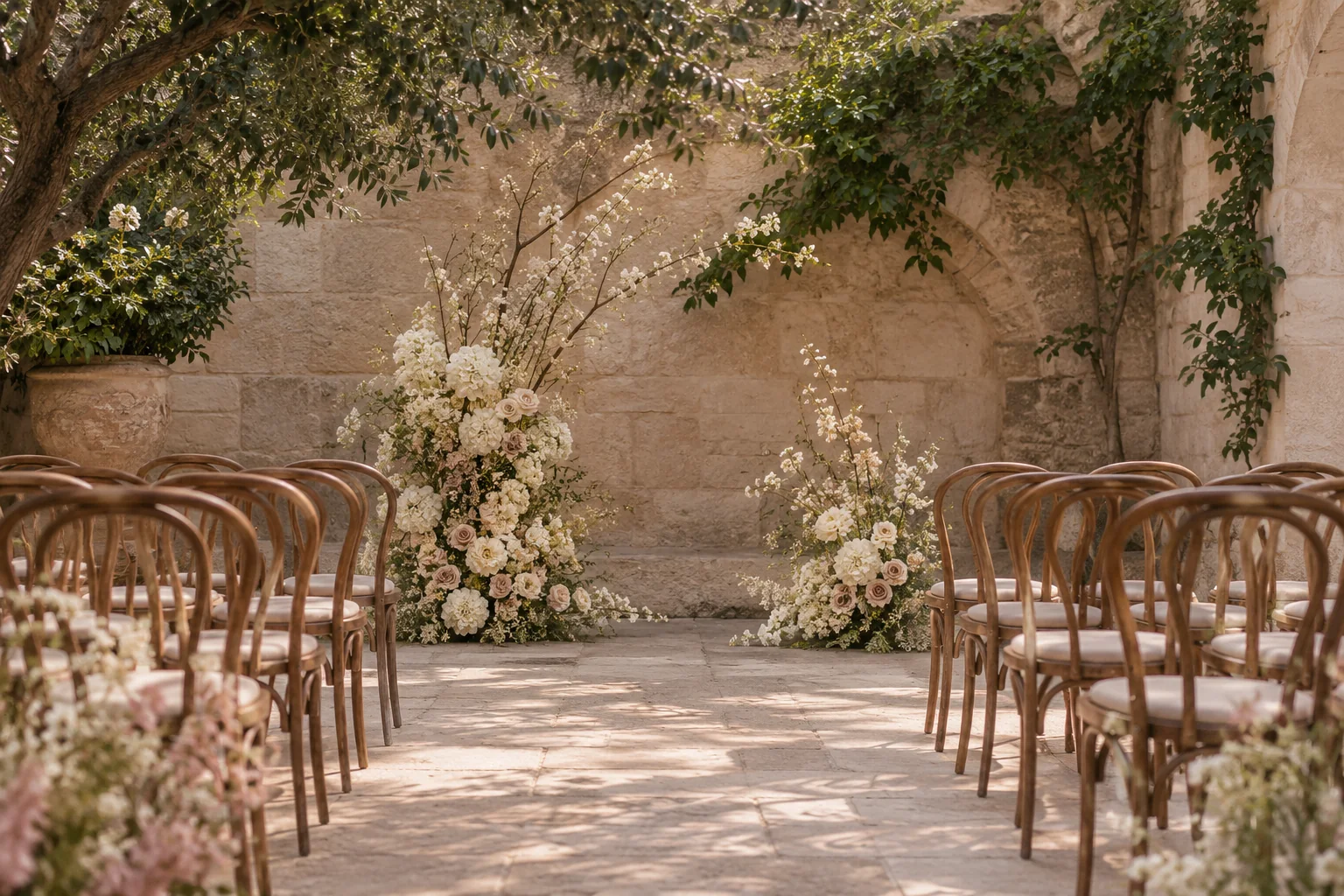
The simplest way to write a meaningful wedding wish
A thoughtful wedding wish usually needs three parts: a warm acknowledgment, one detail that makes the message personal, and a hopeful closing. You do not have to summarize the couple’s relationship or produce a memorable quotation. “Congratulations to you both. I love the ease and humor you bring out in each other, and I hope the years ahead leave plenty of room for both” is enough. Specific, comfortable language feels more sincere than a formal message you would never say aloud.
Match the message to your relationship and the setting. A private card can hold a shared memory; a guest book needs a shorter note; a public social post should avoid personal information. Write to both partners by name when possible. If you know one much better, include the other warmly without pretending to have a close friendship that has not yet developed.
Wedding wishes for a close friend
For a close friend, start with the person you know and the happiness you can genuinely observe. You might write: “Maya and Ellis, seeing you build a home full of laughter has been such a joy. I hope marriage gives you more of the good things already taking shape: patient conversations, excellent dinners, and someone who always saves you a seat.” A small familiar detail can carry affection without turning the card into a story about your friendship alone.
Another option is quieter: “I am so glad you found a person with whom ordinary days feel good. Wishing you a marriage with room for adventure, rest, and all the versions of yourselves you will become.” Avoid jokes about losing your friend, being replaced, or finally settling down. Those lines may land differently when a partner or family member reads the card. If a joke needs an explanation, choose a kind sentence instead.
Messages for siblings and family
A family wedding can invite nostalgia, but the couple should remain at the center. A sibling might write: “Watching you begin this chapter means more than I can easily say. I am grateful for the years we have shared, and excited to see the life you and Jordan create together. May your home feel welcoming, your disagreements stay kind, and your best days include plenty of laughter.” This acknowledges history without describing the new spouse as an outsider joining a fixed family hierarchy.
For a child or younger relative, offer support rather than instructions: “We are cheering for both of you, today and in the ordinary years ahead. We hope you build a life that reflects your own values, and that you always know you have people to call.” Avoid unasked advice about children, money, or who should compromise. A wedding card is a good place to express love; it rarely needs a lesson about how marriage works.
Warm wishes for colleagues and acquaintances
When your relationship is professional or relatively new, simplicity is useful. “Congratulations on your wedding. Wishing you both a joyful celebration and a happy life together” is warm without overstepping. If you have heard a colleague speak fondly about their partner, you can add: “It has been lovely hearing how excited you are for this day.” You do not need a detailed personal observation to make a message feel considerate.
For a group card, write something that stands alone rather than referring to an office joke nobody else will understand. Keep comments about time off, workload, and returning to work out of the wedding wish. If you are signing for a team, use the names of those who actually agreed to participate. A gift contribution does not give anyone permission to share private details about the couple or describe their plans publicly.
Short wedding wishes for small spaces
A short message can still feel personal when it contains one clear idea. Try “Wishing you a home full of kindness and a life full of good stories,” or “So happy to celebrate the two of you and the life you are making together.” For a guest book beside a photograph, “A beautiful beginning for two people we love” may be enough. Resist squeezing a long paragraph into a tiny card if it becomes difficult to read.
Other adaptable lines include “May you keep making ordinary days feel special,” “Here is to friendship at the heart of everything,” and “Wishing you joy today and steady care in all the years ahead.” Choose one, then add names and a sincere closing. If you are posting online, wait until the couple has shared the wedding themselves and avoid revealing their venue, surname change, or travel plans without permission.
When faith, humor, or poetry belongs
Religious language can be meaningful when you know it reflects the couple’s beliefs. Use wording familiar to their tradition rather than blending several traditions into a generic blessing. If you are unsure, a kind secular wish is respectful. Never use a wedding card to challenge the couple’s faith, sexuality, ceremony choices, or family structure. The purpose is to recognize their commitment, not to ask them to defend it.
Humor works best when the affection is obvious and the joke includes neither humiliation nor a prediction of conflict. “May your marriage include many excellent snacks and very few arguments over what to watch” is gentle enough for many couples, but still depends on your relationship. For poetry, a brief original line often works better than a long borrowed passage. Our vow writing guide offers more ways to move from abstract sentiment to concrete, recognizable language.
Wishes for a second marriage or a complicated season
A second marriage deserves a full, joyful acknowledgment without comparison to the past. Write “Wishing you both a beautiful life together” rather than “Hopefully this time will be different.” If children are involved, mention them only when you know the family welcomes that focus. “We are happy to celebrate this new chapter with your family” can be warm; declaring that everyone is now complete may oversimplify relationships that are still developing.
If a wedding happens during illness, grief, or another difficult period, let joy and reality coexist. “I know this day holds many feelings. I am grateful to celebrate your love and to be beside you as you begin married life” does not insist that the day must be uncomplicated. Avoid suggesting an absent loved one is watching unless you know that belief brings comfort. A private note may be more appropriate than mentioning loss in a public message.
Edit the message before you sign
Read your draft aloud and remove any phrase that sounds like borrowed ceremony language. Check both names, spelling, and the way the couple describes their relationship. Do not assume a surname change or use gendered roles that the couple has not chosen. Keep advice brief or leave it out. A message can wish the couple patience without telling them how they should divide responsibilities or what milestones they should reach next.
Finish with a closing that fits your relationship: “With love,” “So happy for you both,” or simply your name. If you are also giving a speech, save the longer memory for that moment and let the card be something the couple can return to easily. For celebrations after the wedding, explore our anniversary messages. If the words are becoming part of the ceremony itself, our personal ceremony guide can help place them thoughtfully.
If you need another starting point for tone, HeartfeltVerse offers writing inspiration. Adapt any idea into your own words and add a detail that belongs to the couple.
About this guide: Francia Bridal publishes practical inspiration, not event-specific professional advice. Confirm venue rules, supplier arrangements, and local requirements directly. Read our editorial standards.