Choose the silhouette before the flower list
The most useful starting point for a bridal bouquet is its shape, scale, and feeling. A compact round bouquet reads differently from an airy hand-tied arrangement even when both use roses. Think about how the bouquet will sit against your clothing, how comfortable it will be to carry, and what you want it to contribute to photographs. A clear silhouette gives your florist room to work with suitable flowers rather than chase an exact stem list at any cost.
Collect a few reference images, then describe what you like in each. It might be loose spacing, a narrow color palette, trailing movement, or visible stems. Two photographs can look similar while using very different ingredients. Mark anything you dislike as well: stiff symmetry, long ribbons, strong fragrance, or exposed wire. A short written brief is often more useful than a large folder of images with no explanation.
Round and posy bouquets: composed, compact, and clear
A round bouquet has a defined outline and relatively even distribution of flowers. It can suit structured tailoring, a clean gown, or a ceremony where you want the flowers to feel composed rather than loose. A posy is usually smaller and easier to carry, though size descriptions vary between florists. Ask for approximate dimensions rather than relying on the style name alone. A small bouquet can still have rich texture and thoughtful color.
For a classic effect, use related tones and a limited number of flower types. For a more contemporary result, let one shape lead, such as rounded blooms with a few fine accents. Check the handle thickness, especially if you will carry it for a long processional or during portraits. A dense arrangement can become heavy. You should be able to hold it comfortably without squeezing hard or raising your shoulders.
Garden and hand-tied bouquets: relaxed does not mean unplanned
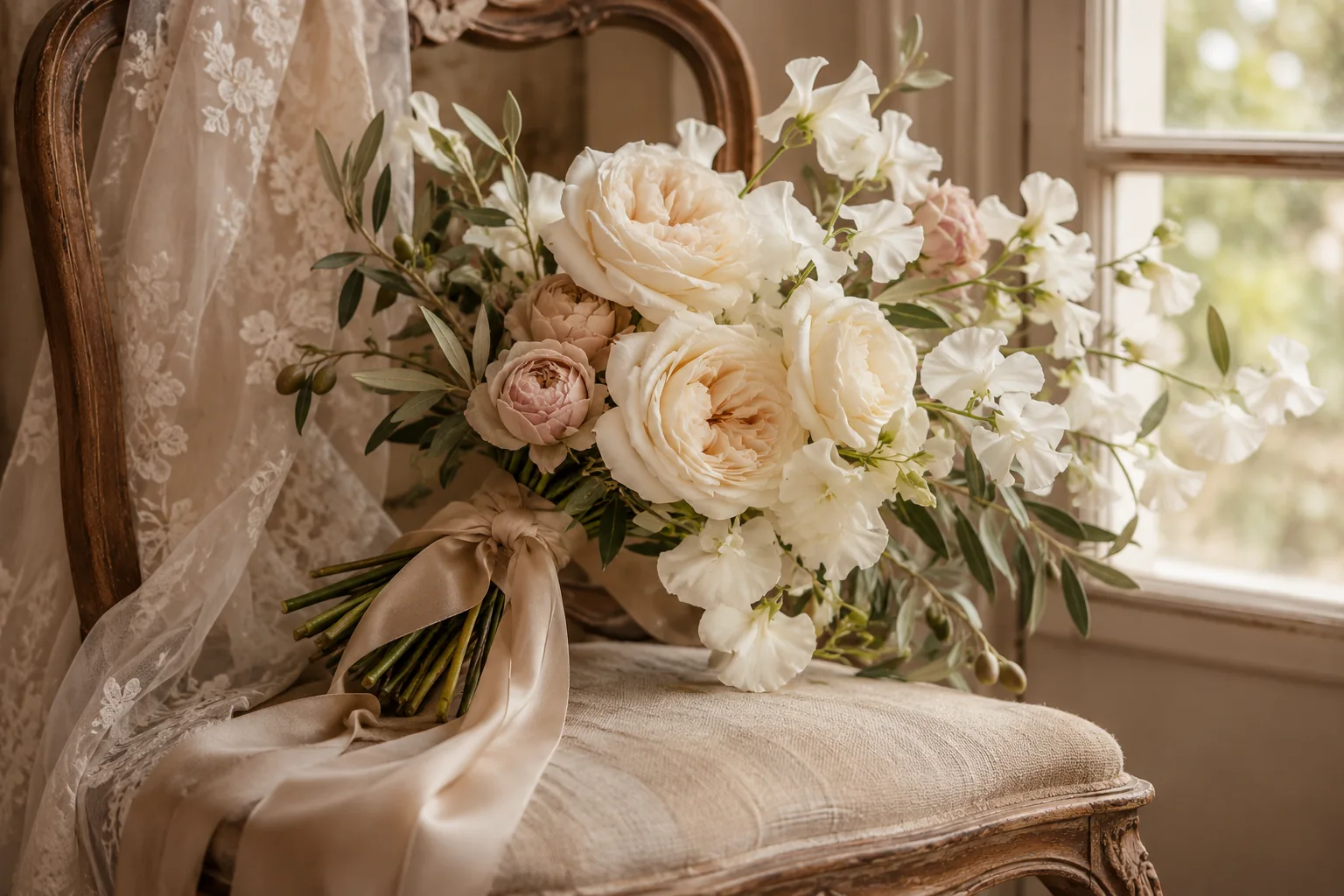
A garden-style bouquet often uses varied heights, natural movement, and some visible space between flowers. “Hand-tied” describes an arranging approach more than a single silhouette, so tell your florist how loose or compact you want the result. An airy arrangement can look informal while still requiring careful mechanics. Its outline should feel intentional from several angles, not only from the front of the reference image.
Ask how the bouquet will hold up in the expected conditions. Delicate petals may need protection from heat or wind, and some ingredients change appearance as the day progresses. Allow substitutions within your color and texture brief. For example, you might request soft cream, pale peach, and a little fresh green, while giving the florist discretion over the exact varieties. That protects the feeling of the design when availability shifts.
Cascading and asymmetric bouquets: movement with a plan
A cascading bouquet draws the eye downward with trailing flowers or foliage. An asymmetric design may extend more strongly to one side without becoming a full cascade. Both can be striking with simple clothing, but their proportions deserve a conversation. Measure against your height and the lines of your outfit rather than ordering the largest version you have seen. Long stems and trailing pieces can cover details you wanted to show.
Practice the carrying angle when you collect the bouquet or during a consultation if a sample is available. Some designs have a clear front and can look awkward when turned. Ask the florist to mark the back discreetly or explain how your hand should sit. Think about stairs, a narrow aisle, a train, and getting into a car. An impressive silhouette should still leave you able to move naturally and accept a hand when needed.
Single-variety and minimal bouquets: every detail shows
A bouquet built from one flower type can feel graphic and calm. Tulips, calla lilies, roses, or another suitable variety may create a clean outline without extra foliage. Minimal arrangements put more attention on stem condition, spacing, and finishing, so “simple” does not automatically mean inexpensive. Ask the florist what achieves the desired shape at your budget instead of assuming fewer ingredients always reduce the price.
A single stem or small cluster can be lovely for a civil ceremony or a deliberately understated celebration. Consider how it will photograph beside the outfit and whether it needs a ribbon or another comfortable grip. If you love a particular flower, discuss season, sourcing, and alternatives early. Some flowers continue to move or open after arranging; ask what change to expect rather than treating the delivery appearance as permanent.
Build a palette that belongs to the whole day
Begin with the setting and clothing, then add flowers. Warm ivory fabric, cool white fabric, stone walls, dark wood, and green gardens can all shift the way colors appear. Look at fabric swatches and flower references in natural light when possible. A bouquet does not need to match every table arrangement, but a shared undertone or repeated flower shape can connect the ceremony and reception without making everything identical.
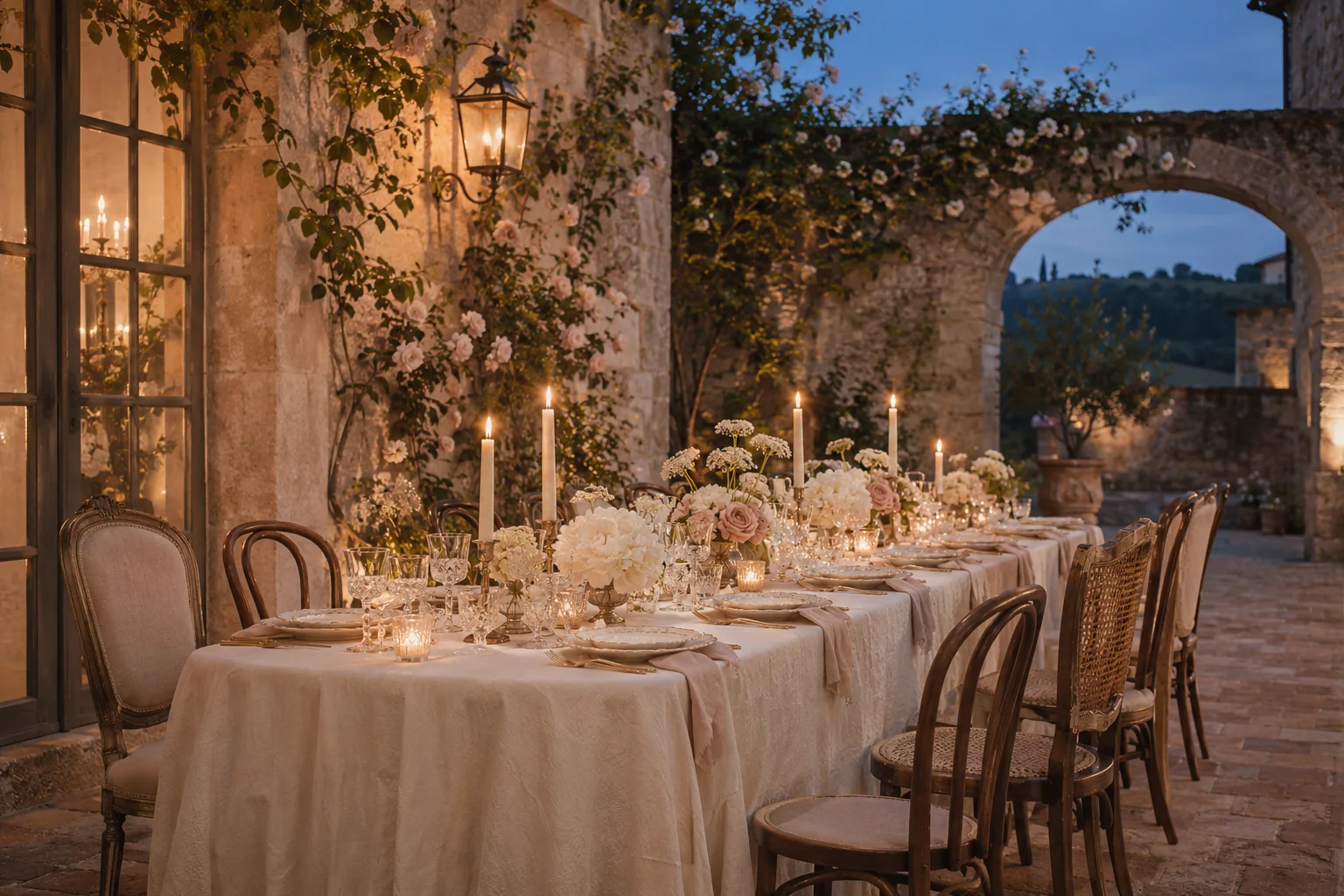
For a restrained palette, vary texture rather than adding many colors. Cream blooms, soft brown centers, fine foliage, and a ribbon with a little sheen can create depth within a narrow range. For stronger color, decide which shade leads and which shades support it. Our intimate reception ideas include ways to carry a floral mood onto tables without filling every available surface.
Write a florist brief with practical boundaries
Give your florist the date, ceremony location, approximate collection or delivery time, bouquet budget, outfit details, and any relevant access arrangements. Say whether the bouquet will travel, be used outdoors, or need to last through a long gap before portraits. Include allergies or fragrance sensitivities, and ask about flowers that may shed pollen or transfer color onto fabric. Keep flowers away from pets and children unless a knowledgeable professional confirms the ingredients are appropriate around them.
Separate your brief into must-haves and preferences. A must-have might be no strong fragrance; a preference might be a particular pale pink flower. Ask what the price includes, whether delivery is separate, how substitutions are handled, and when the final balance is due. If you want matching personal flowers or a smaller arrangement for a family member, request them together so the florist can coordinate the whole order.
Care, carrying, and what happens afterward
Follow the florist’s care instructions rather than improvising a home remedy. Keep the bouquet in a stable container when it is not being carried, protect it from direct heat, and check for drips before bringing it near clothing. Assign one person to look after it during dinner or dancing. Ask before placing a heavy bouquet in a small decorative vase, since it may tip and damage flowers, linen, or nearby electrical equipment.
If preservation matters, research the process before the wedding and understand the dispatch window, cost, and likely appearance. Dried or pressed flowers will not look exactly as they did fresh. You can also photograph the bouquet, keep a ribbon, or share flowers with guests where practical. Use the wedding timeline guide to place delivery and portrait time, and the ceremony guide to think through carrying and handoff moments.
About this guide: Francia Bridal publishes practical inspiration, not event-specific professional advice. Confirm venue rules, supplier arrangements, and local requirements directly. Read our editorial standards.