Design for closeness rather than a scaled-down ballroom
An intimate wedding reception feels memorable when guests can settle in, hear one another, and understand what happens next. A smaller guest count gives you options, but it does not automatically make planning simple or inexpensive. Begin with the experience you want: a long relaxed dinner, a lively restaurant gathering, a garden lunch, or an evening with music and dancing. Then choose a room, menu, and schedule that support that experience.
Decide what “small” means for your own plans rather than aiming for someone else’s number. A gathering of twelve behaves differently from one of fifty. Ask how many people can sit comfortably with chairs pulled out, where coats and bags will go, and how staff will reach the tables. A room that technically fits the guest list may still feel cramped once flowers, music equipment, and service stations are added.
Before booking, write down the three moments you most want to enjoy as a couple. Perhaps that means greeting every guest, sitting through the meal together, and hearing a short toast from a loved one. Use those priorities to judge later additions. A smaller event can still become overcrowded with activities if every attractive idea enters the schedule.
Choose the room for its atmosphere and its working details
A private restaurant room can offer furniture, staff, tableware, and a kitchen in one arrangement. A home or garden may feel deeply personal but require rentals, power, toilets, cleanup, and weather cover. Compare complete costs rather than venue fees alone. Ask what is included, what is restricted, when access begins, and who is responsible for returning the space to its original condition. Written answers are easier to plan around than assumptions.
Visit at a similar time of day if possible. Listen for traffic, neighboring events, and echoes. Check lighting after sunset and the route from arrival to the dining area. Confirm step-free access and accessible restrooms rather than assuming an attractive old building has them. Ask guests privately about needs that affect seating, food, transport, or communication. Thoughtful access is part of hospitality, not a separate decorative detail.
Let the table plan support conversation
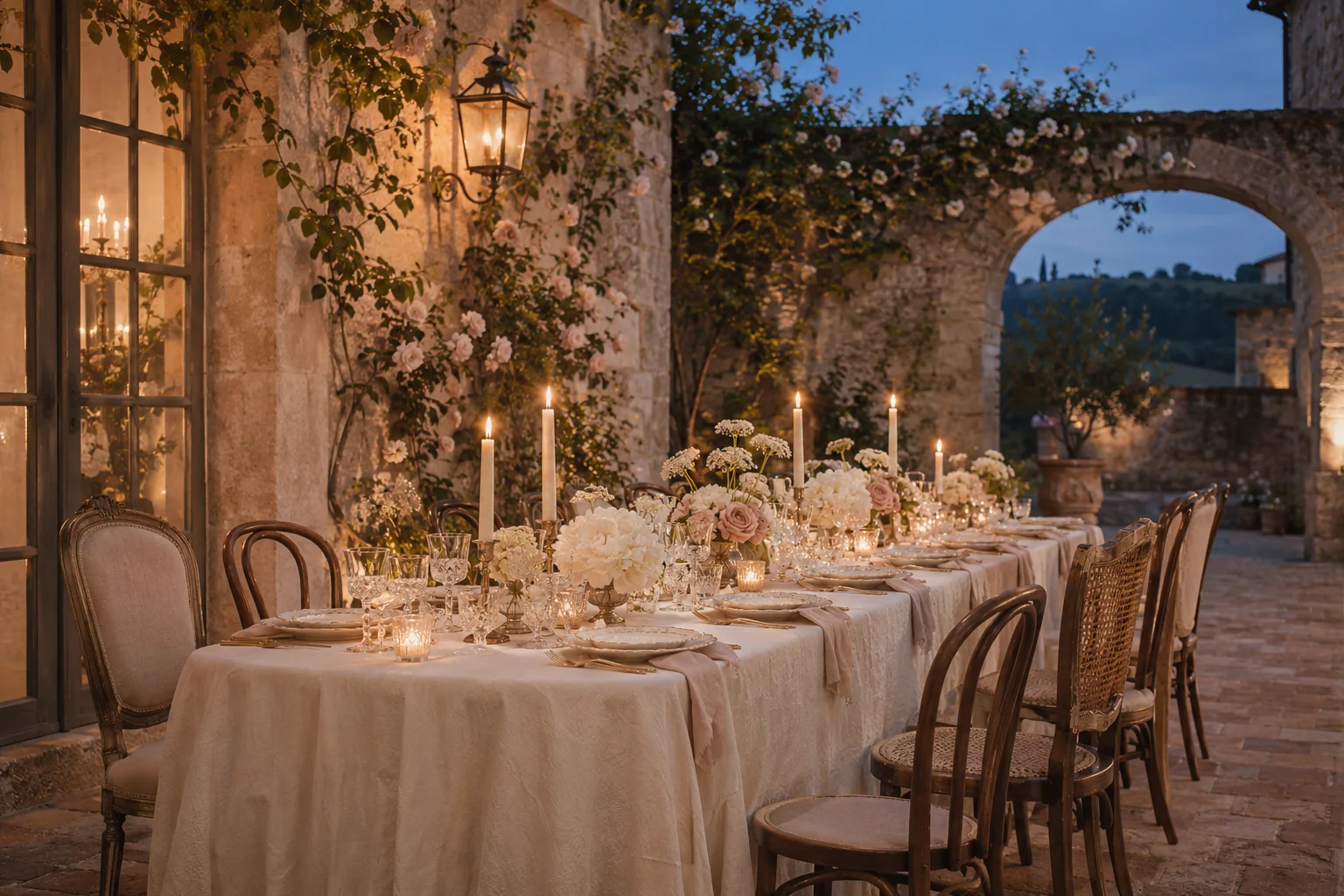
One long table can create a shared dinner-party feeling, but it is not always the most conversational choice. Guests usually speak with the people immediately beside and across from them. A very wide table or tall centerpiece can make those conversations harder. A few round tables or a U-shaped arrangement may work better in a particular room. Ask the venue for a measured plan showing chair space and staff routes before deciding.
Seat guests with familiar people and a plausible new connection rather than forcing everyone to mingle. Keep children near caregivers and consider hearing needs when placing people near speakers or busy service areas. Place cards can reduce awkwardness even at a small dinner. If family relationships are sensitive, arrange the plan quietly and communicate with the relevant people without explaining private reasons to the entire guest list.
Put the food format in service of the evening
A plated meal offers a clear rhythm and can simplify movement in a tight room. Family-style service can encourage sharing, but platters need table space and staff should explain ingredients clearly. A buffet gives choice but requires an accessible route and a plan for queues. Canapés alone may leave guests hungry if the invitation suggests a full meal, so communicate the format and timing accurately.
Gather dietary requirements early and send them to the caterer in a clear list. Ask how allergies and cross-contact are handled; a handwritten menu label is not a substitute for a kitchen plan. Include satisfying nonalcoholic drinks, water that is easy to reach, and food available at sensible intervals. Choose dishes that fit the season and service setup rather than a menu designed only around photographs. A well-paced familiar meal can feel more generous than a complicated menu served late.
Use fewer decorative decisions, with more intention
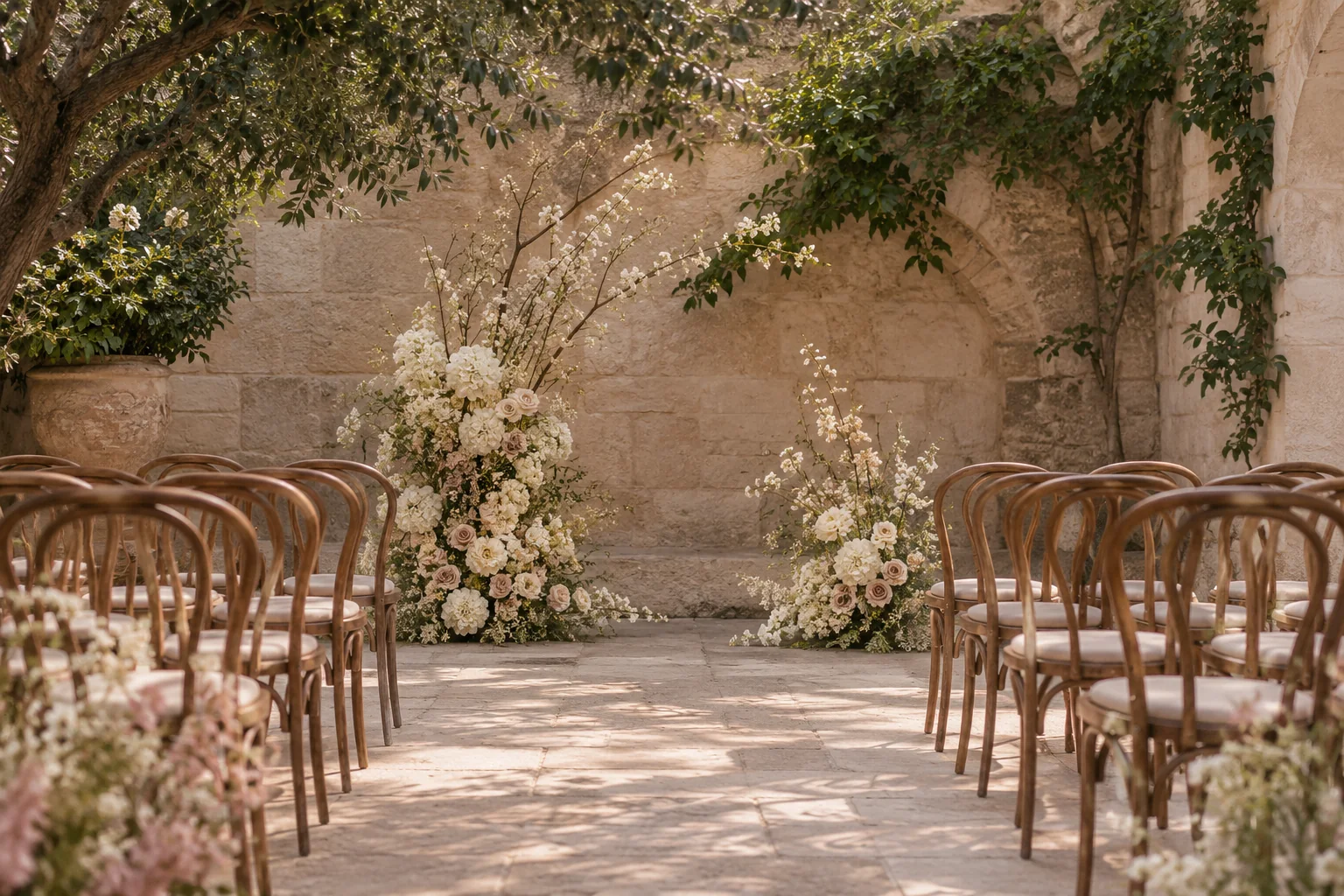
A small reception does not need every surface styled. Start with lighting, linen, and a floral shape that suits the room. Low arrangements preserve sightlines; a few candles may add warmth where open flames are allowed. Check whether the venue requires enclosed flames or battery alternatives. Keep decorative pieces out of service paths and avoid unstable arrangements at the edges of narrow tables.
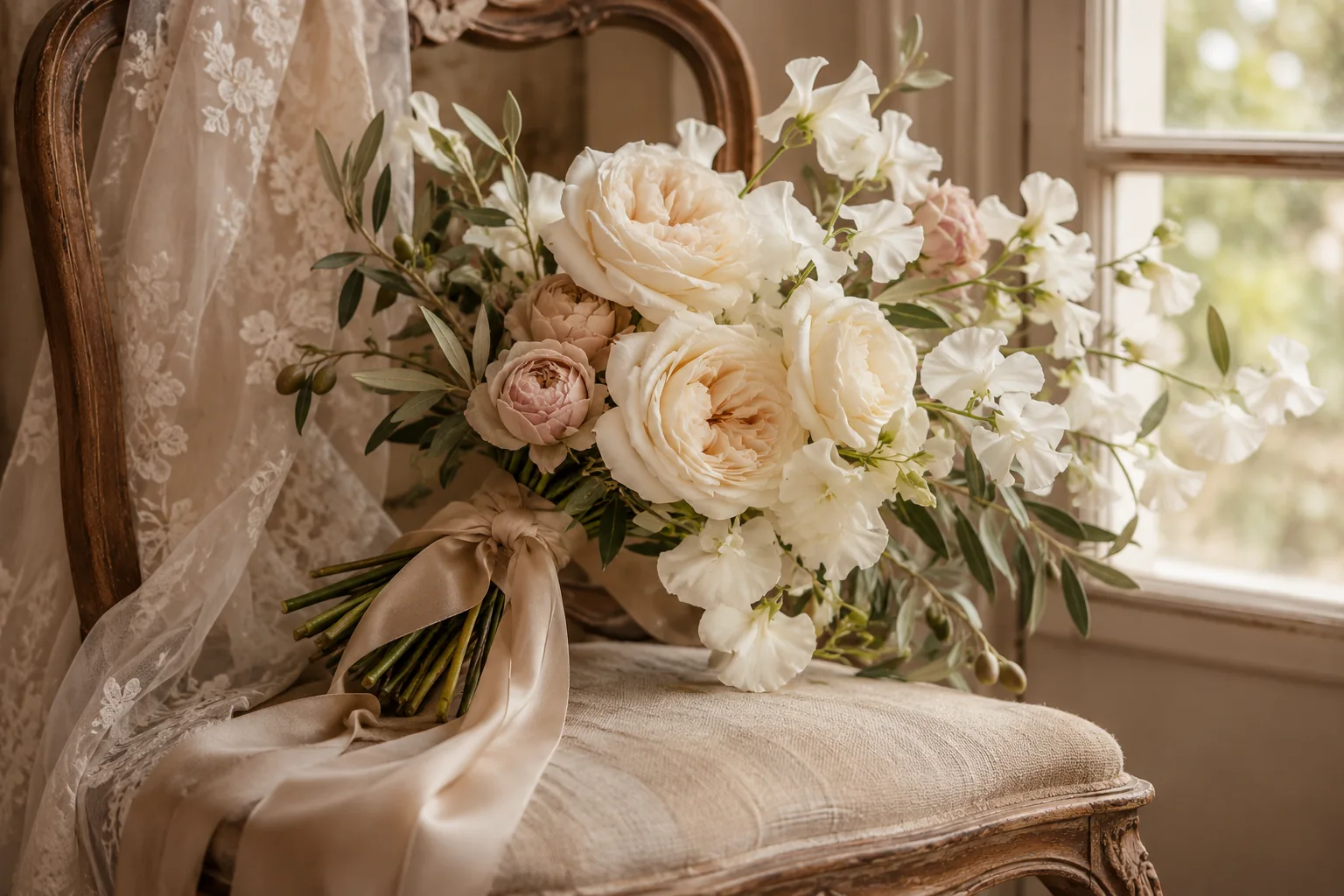
Repeat a color or texture rather than reproducing the same centerpiece everywhere. A blush ribbon, warm paper menu, and softly colored flowers can connect the setting without looking rigid. Our bouquet style guide can help you describe the floral feeling you want. Consider what guests actually touch and use: a comfortable chair, readable menu, and enough space for a glass may matter more than an elaborate place setting.
Make personal touches easy to receive
A short handwritten note at each place can be lovely if you have the time and desire to write one. Keep it about the guest rather than using every note to ask for advice or participation. Another option is a shared menu with a brief story about one dish, or a photograph display that guests can browse without being gathered for a formal presentation. Personal details work when people can enjoy them naturally.
Avoid turning a small guest count into an obligation for everyone to perform. Not every person wants to give a speech, answer a public question, or join a game. If you invite contributions, explain the format in advance and make declining comfortable. A conversation prompt on a table can remain optional. The goal is to help people feel included, not to test how enthusiastically they can participate.
Give speeches and music a clear place
At a small dinner, a few sincere words can carry across the room without a formal stage. Still, agree on speakers, approximate lengths, and an order. Ask someone to introduce the moment so staff can pause noisy service. Do not surprise guests with an open microphone unless you are comfortable with an unpredictable schedule and have someone ready to bring it to a close kindly.
Choose music around conversation first, then decide whether the evening needs a louder shift. A playlist should have someone responsible for starting it, adjusting volume, and resolving interruptions. If there will be dancing, confirm the available area and any sound limits. Our wedding wishes guide offers a useful starting point for short spoken congratulations that avoid long speeches or private stories.
Protect the transitions, budget, and ending
Write down arrival, first drinks, seating, meal service, speeches, dessert, and departure. Leave room for people to move and for staff to clear. If the ceremony and dinner share a space, ask who resets it and where guests will be during that work. Use the wedding day timeline guide to connect those parts without expecting one room to perform two jobs at once.
Spend first on the things that affect everyone: a suitable room, enough food, comfortable seating, and reliable service. Keep a contingency for costs that emerge from your actual plan, and ask about minimum spends, overtime, and rental collection. Finish with a clear departure arrangement and someone responsible for gifts, flowers, and belongings. An intimate reception feels relaxed when the practical decisions have already been made, leaving you free to join the dinner rather than supervise it.
For outdoor-event safety, consult the National Weather Service lightning guidance and agree on a suitable shelter and weather decision process with the venue. Decorative canopies should not be assumed to provide lightning protection.
About this guide: Francia Bridal publishes practical inspiration, not event-specific professional advice. Confirm venue rules, supplier arrangements, and local requirements directly. Read our editorial standards.