Begin with the feeling, then choose the details
A romantic wedding ceremony feels personal when its choices reflect the relationship rather than a list of expected wedding moments. Start with three decisions: what you want to promise, who you want to include, and how you want the room to feel. A simple ceremony with a thoughtful welcome, sincere vows, and space to hear them can feel more intimate than an elaborate production. Flowers and music support that experience; they do not have to carry it.
Write three words independently, then compare your answers. Perhaps one partner chooses calm, joyful, and familiar while the other chooses warm, honest, and relaxed. Those overlaps become a useful brief for your officiant and suppliers. If a proposed addition makes the ceremony feel theatrical when you both want quiet, leave it out. You can appreciate an idea without making it part of your wedding.
Give your officiant a story worth telling
Share specific details your officiant can use with permission: an ordinary routine you love, a difficult season you navigated together, or the way your priorities have changed. “We make coffee for each other” often reveals more than “we are best friends.” Explain which stories should stay private, particularly family conflict, past relationships, health matters, and anything one partner might find embarrassing in front of guests.
Ask to review the factual outline before the day. Names, pronunciation, pronouns, family acknowledgments, and cultural references deserve careful attention. You do not need to script every laugh, but you should know whether the ceremony includes an unexpected anecdote. Agree on the tone of jokes and a practical length. A gentle story followed by a clear reflection on marriage usually gives guests more to hold onto than a long account of every date.
Use readings as a conversation, not a recital
Choose a reading because it says something your ceremony needs, not because it appears on a popular list. A short passage about everyday care may complement ambitious vows. A family poem may connect a new marriage to the people who raised you. Ask the reader whether the text feels comfortable to say aloud, and give them a large-print copy with pauses marked. A confident delivery depends on preparation, not simply confidence in public speaking.
Check permissions before printing substantial copyrighted passages in programs or publishing them online. For readings in another language, consider including a brief translation or a sentence explaining the meaning. Two readings can work beautifully when they offer different perspectives, but avoid stacking several selections that make the same point. Let silence follow a strong final line rather than rushing immediately into the next instruction.
Make room for promises you can actually keep
Personal vows become moving through recognizable details and credible commitments. Promise to listen before trying to solve every problem, to protect time together, or to return to a conversation after you have cooled down. Describe a small truth about your partner before moving into the future. You can be romantic without promising permanent happiness, effortless agreement, or a life without difficult days.
Decide together whether vows will be public, private, or a combination. Some couples exchange personal letters before the ceremony and use traditional wording in front of guests. Others agree on a shared length and keep the words a surprise. Our guide to writing wedding vows offers a practical drafting method. Ask your officiant which wording is required for your location and ceremony type; personal additions do not replace any legal requirements.
Choose a ritual that has a real connection
A shared ritual works best when you can explain its significance in one sentence. You might invite loved ones to contribute wishes to a keepsake box, plant something together after the ceremony, or read a letter you will open on a future anniversary. The object matters less than the reason. Avoid borrowing religious or cultural practices simply because they look beautiful in photographs; speak with someone responsible for the tradition and respect boundaries around participation.
Test the physical steps in advance. Sand can blow away outdoors, candles may be restricted, and a box with a stiff clasp can interrupt the moment. Assign someone to place and remove objects so neither partner has to manage a table full of supplies. If a ritual needs a lengthy explanation or creates uncertainty about what everyone should do, simplify it. A clear gesture gives guests space to understand what they are witnessing.
Bring guests closer without making anyone uncomfortable
An intimate atmosphere does not require asking every guest to speak. A semicircle can make a small ceremony feel connected, provided everyone can see, hear, and reach their seat. Leave usable aisles, reserve accessible spaces alongside companions, and ask guests privately about accommodations rather than assuming what they need. A microphone is often helpful even for a small group, especially outdoors where wind and traffic compete with quiet voices.
Consider a shared response led by the officiant, such as asking guests to support your marriage through friendship and kindness. Explain the words before inviting participation, and keep participation optional. If you want family involvement, offer specific roles with a comfortable way to decline. Passing rings through a large crowd can become distracting; a smaller family blessing or a designated ring holder may create the same connection with fewer moving parts.
Let music and setting carry one clear mood
Choose a processional track with a usable entrance rather than only a beautiful chorus. Listen from the beginning, mark where people will start walking, and tell the musician or operator what to do if the entrance takes longer than expected. A live instrumental piece, an acoustic arrangement, or a familiar song played simply can support the room without demanding attention. Check the venue’s sound rules and weather plan before finalizing equipment.
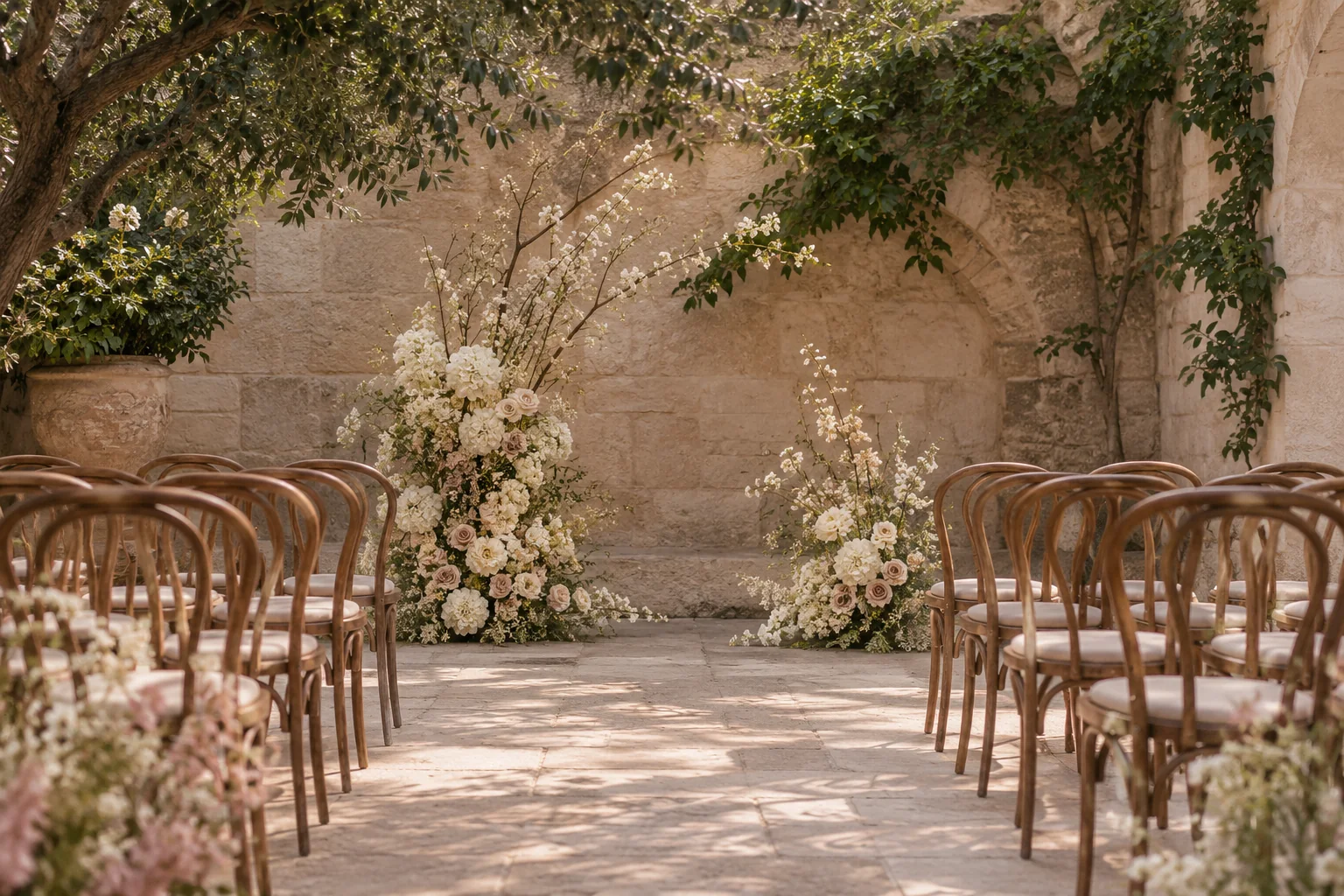
Keep the ceremony backdrop legible. A textured wall, soft garden planting, or a small arrangement can frame you without blocking sightlines. Look at the setting from a guest’s seated height, not just the photographer’s standing position. Bright afternoon sun may put one partner in shadow and leave guests squinting. A site visit at roughly the ceremony hour helps reveal whether shade, a different orientation, or a modest timing change would improve the experience.
Build a calm ending and a workable backup
Agree on what happens immediately after the final words. Tell guests whether to stay seated, follow you to drinks, or gather for a photograph. Give yourselves a short private pause if you want one, and tell the coordinator where you will be. Confetti, petals, and bubbles require venue approval and a cleanup plan. An enthusiastic exit should not create a slippery surface or surprise someone with sensory sensitivities.
Write a weather decision deadline, designate the person authorized to make the call, and prepare a complete indoor version rather than a vague promise to move inside. Use our wedding day timeline guide to protect setup and transition time. If you are planning a smaller celebration, the intimate reception guide can help carry the same sense of care into dinner. Romance is easier to feel when nobody has to solve logistics during the promises.
For outdoor-event safety, consult the National Weather Service lightning guidance and agree on a suitable shelter and weather decision process with the venue. Decorative canopies should not be assumed to provide lightning protection.
About this guide: Francia Bridal publishes practical inspiration, not event-specific professional advice. Confirm venue rules, supplier arrangements, and local requirements directly. Read our editorial standards.